
How Fairphone Set Up Its First U.S. Executive for Success
Five lessons from Fairphone and Nora Levinson on setting your first U.S. executive up for success, from headquarters immersion to the first 90 days.
Most European companies treat their first U.S. hire as the finish line. The search is done, the offer is signed, and the new leader is expected to start delivering from day one.
Fairphone treated it as the starting line.
When the Amsterdam-based company expanded into North America, it moved from testing the market with audio products to launching its smartphones across D2C, Amazon and a growing retail footprint. To lead that market, it needed its first U.S. executive. Key Search ran the search that brought Nora Levinson to Fairphone.
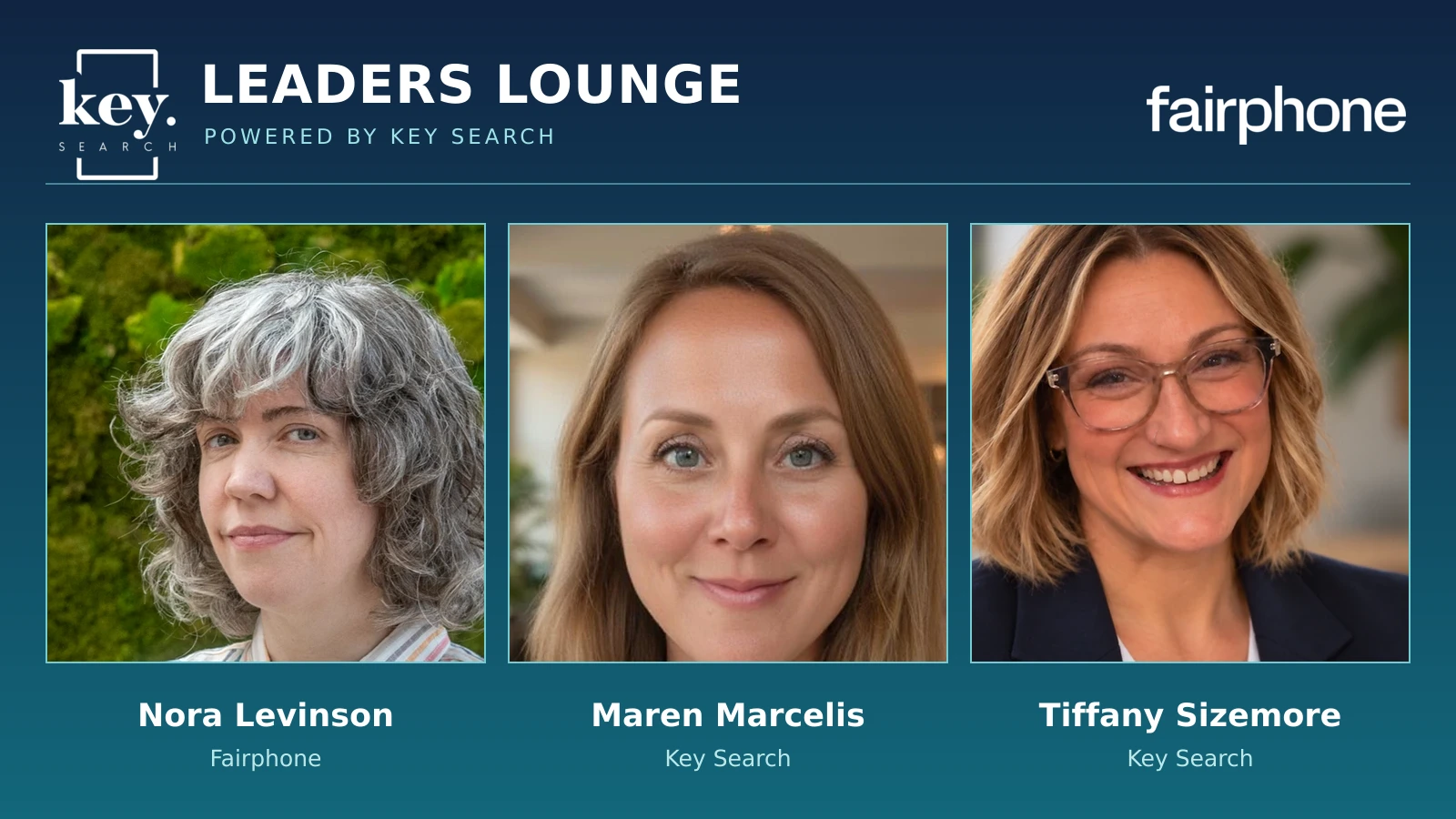
In the latest episode of Leaders Lounge, Nora joins Key Search partners Maren Marcelis and Tiffany Sizemore to share what Fairphone did after the offer was signed, and why those first 90 days mattered as much as the hire itself.
Here are five lessons for any European company preparing to put its first leader on the ground in the United States.
1. Start at headquarters, not in the new market
Nora's first two weeks were not spent in the U.S. They were spent on site at Fairphone's HQ in Amsterdam.
It can feel counterintuitive. You hired someone to build the U.S. market, so why not send them straight there? Because your first U.S. executive will spend the next year representing the company, making decisions on its behalf and translating its strategy for a new audience. They can only do that well if they understand the people, the products and the culture behind it. An immersion at HQ builds the relationships that later make a 6-hour time difference workable.
2. Redesign the operating rhythm, not just the calendar
Adding a U.S. leader to existing meetings is not enough if those meetings take place when it is 3am in New York. Fairphone rescheduled its recurring HQ meetings so its U.S. lead could actually be in them, and kept alignment through monthly 1:1s.
It is a small change with a big signal: the U.S. is part of the company, not an outpost reporting into it.
3. Hand over relationships, not just accounts
In her first 90 days, Nora took over key partner accounts alongside Fairphone's Chief Commercial Officer, rather than inheriting them from a spreadsheet. Operational ownership came after the launch, and the U.S. business started within a centralized budget.
That sequence matters. Partners keep their trust in the company while the new leader builds their own, and the executive earns autonomy step by step instead of receiving it all on day one with no context.
4. Translate culture in both directions
U.S. sales targets are aggressive. European headquarters tend to build relationships first. Both are right, and the first U.S. executive lives in the gap between them.
One of the most practical lessons from the conversation is to assume positive intent. Direct European feedback can read as criticism to someone used to U.S. communication styles. Expecting that, and reading it generously, avoids friction that has nothing to do with performance. The same applies at HQ: ambitious U.S. targets are not impatience, they are how the market works.
5. Hire for range and network, not only category experience
It is tempting to look for a candidate who has done the exact job in the exact category before. Fairphone's experience suggests another route: a leader who builds an external network through industry advisors can outperform someone hired strictly for narrow category specialization.
When you are building a market from zero, the ability to find the right people quickly is often worth more than a perfect match on paper.
What this means for your U.S. expansion
A successful U.S. expansion is not decided on the day you sign your first executive. It is decided in the weeks after, by how well headquarters prepares, includes and supports that person.
Before your first U.S. leader starts, ask yourself:
- Will they spend time at HQ before they own the market?
- Have we moved our recurring meetings so they can actually attend?
- Who will hand over our key relationships, and when?
- How much budget and decision-making authority will they have in month one, and in month six?
- Have we prepared both sides for the difference in communication styles?
At Key Search, a placement is only a success when the executive is performing. That is why we stay involved after the offer, from onboarding to the check-ins that follow.
Listen to the full conversation
This episode is part of our U.S. Expansion Playbook series on Leaders Lounge:
Planning your U.S. expansion? Book a free Advisory Session with Key Search at us.keysearch.com.
Key Search
Key Search specializes in expansion hires across Europe, the US, and transatlantic searches. To find out more about our US and North American hiring capability, visit us below.
This article and its photos were created with the use of A.I. and reviewed by a human Key Search Partner.
Related articles
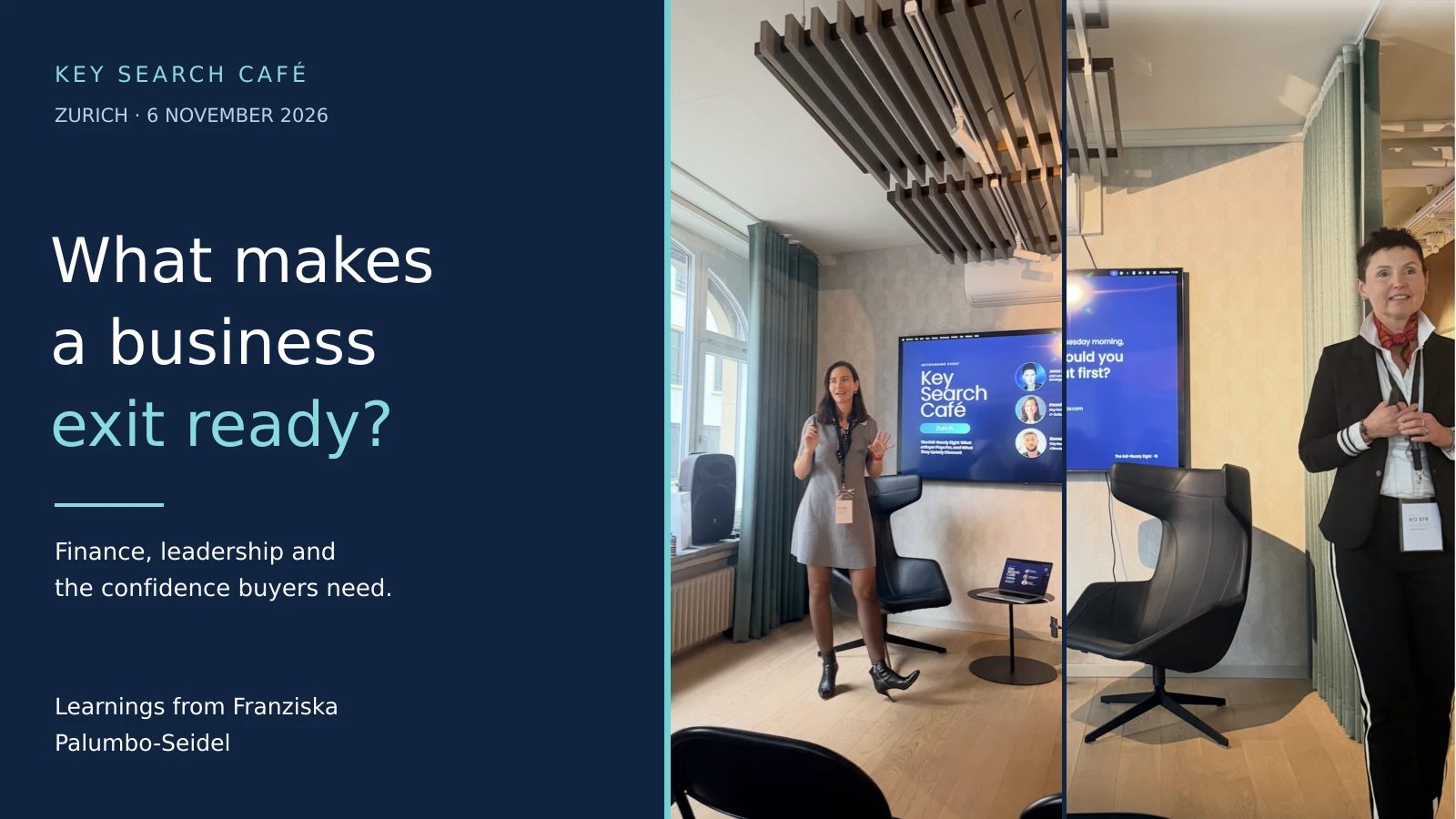
What Makes a Business Exit Ready? My Learnings from Key Search Café Zurich
Franziska Palumbo-Seidel shares what Jana Zimova’s Exit-Ready Eight taught her about financial confidence, founder independence and stronger FinTech leadership.

When Serendipity Strikes: An Evening Inside Miami's Tech Scene
Lila de la Chesnaye and Tiffany Sizemore on an evening with Miami's tech community, from Key Search Café at The Moore to Women in Miami Tech.
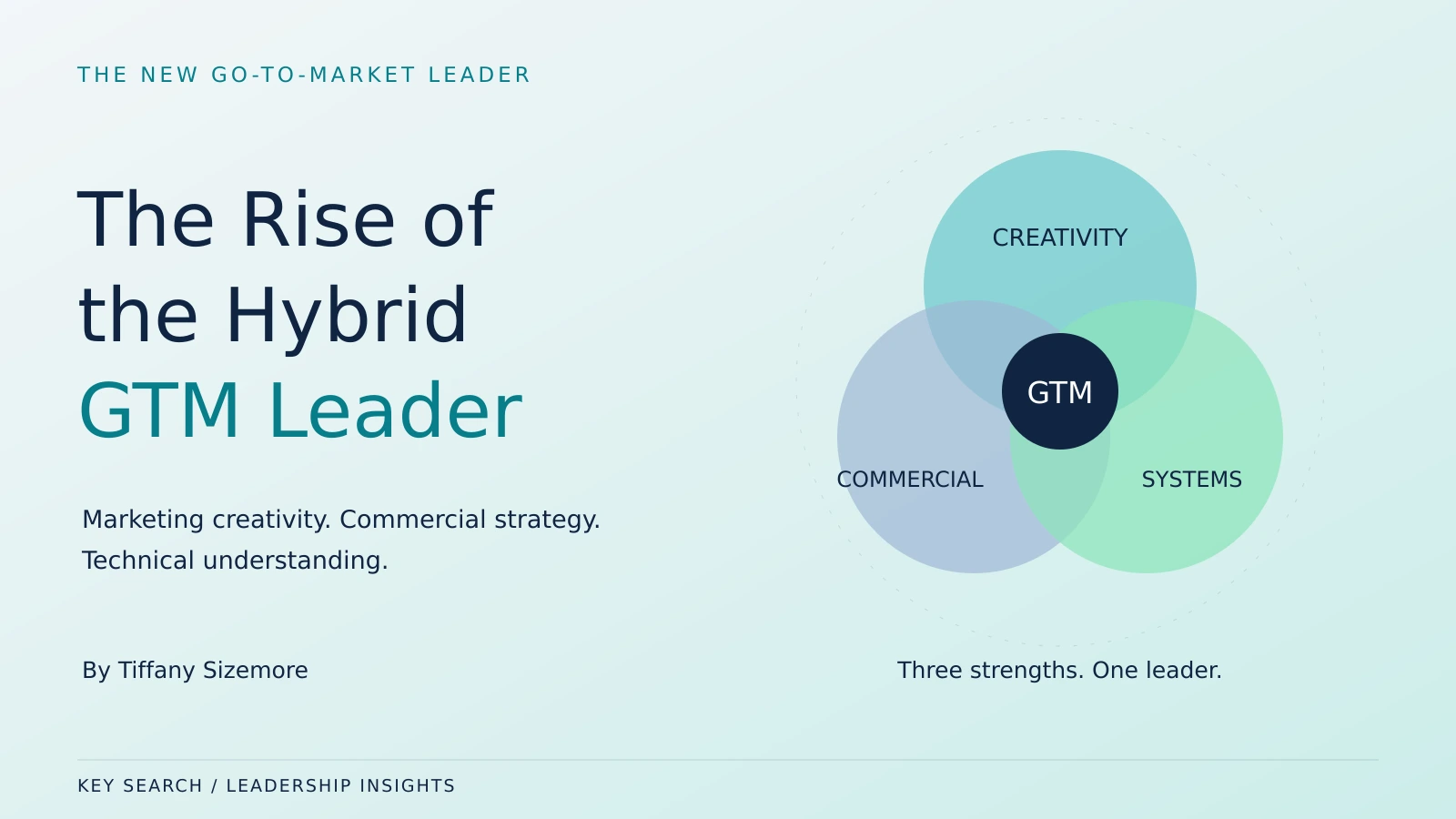
The Rise of the Hybrid GTM Leader
Tiffany Sizemore on the new go-to-market leader blending marketing creativity, commercial strategy and technical understanding to drive predictable growth.