Female LeadershipFundraisingFemale FoundersDEIVenture Capital
What Female Founders Need to Hear About Fundraising
At a roundtable for 30 female founders in Zurich, we tackled the fundraising biases most investors won't admit to. Here are the tactics that actually move the needle.
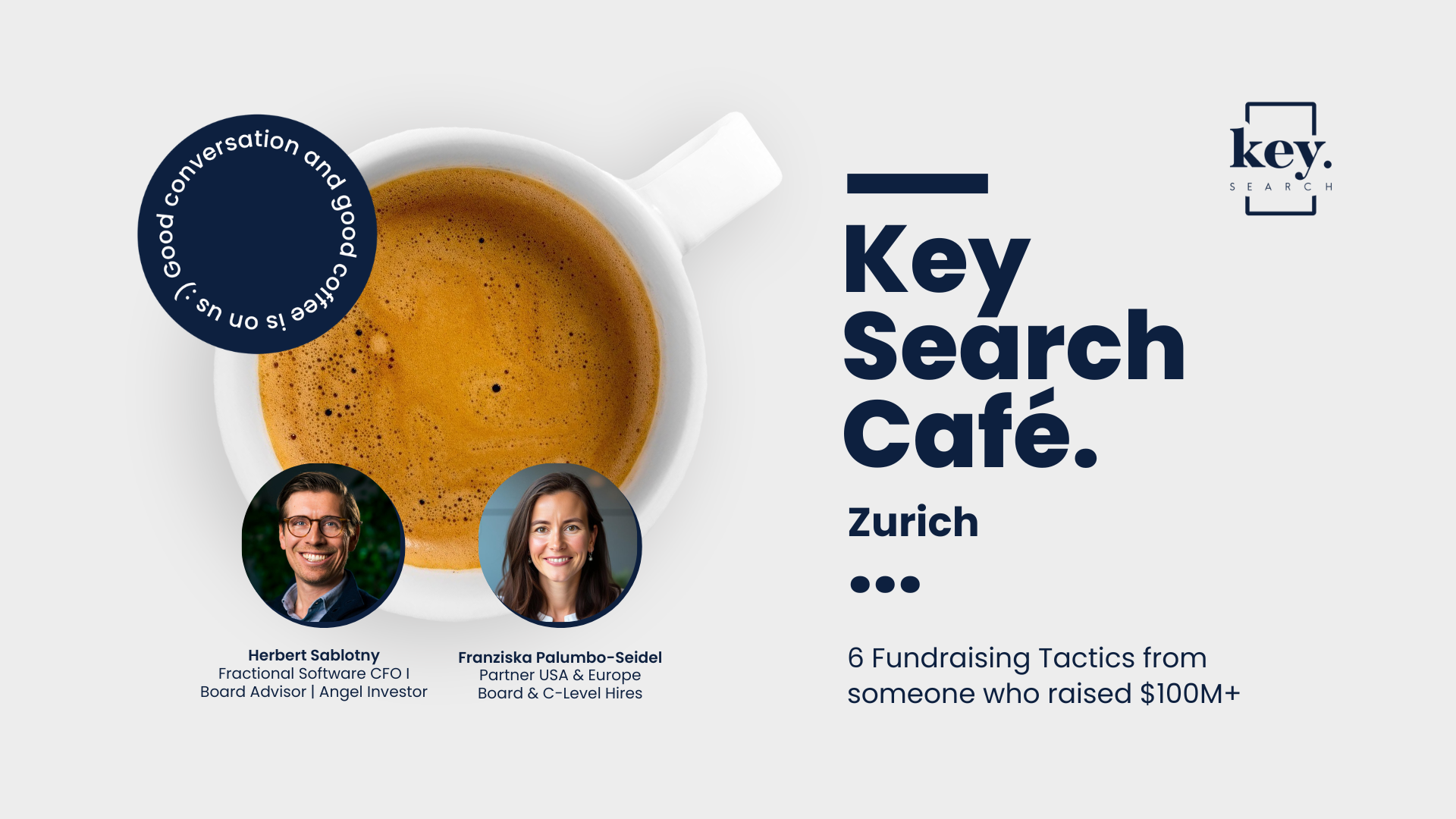
In June 2026, I joined Herbert Sablotny and Nilhan Göktaş in Zurich for a roundtable with thirty female founders. The session was part of Key Search Café — our invitation-only networking event for leaders and founders. Herbert is not only a seasoned operator with two exits and over $100M raised across NYSE-listed and PE-backed companies; he is an active angel investor himself, which gave the conversation a rare dual perspective: someone who has been on both sides of the table. What followed was one of the most honest, energised conversations I've had in years.
The room was full of founders running real businesses across fintech, health, AI, and education. They weren't there for theory. They wanted to know why their rounds were taking longer, why certain questions kept coming up in investor meetings, and what to do about it. What Herbert, Nilhan, and I shared draws on our combined experience navigating capital markets, leading large-scale transformations, and placing senior executives into the companies that define these ecosystems. Here is what we told them — and what I believe every female founder navigating today's funding market needs to hear.
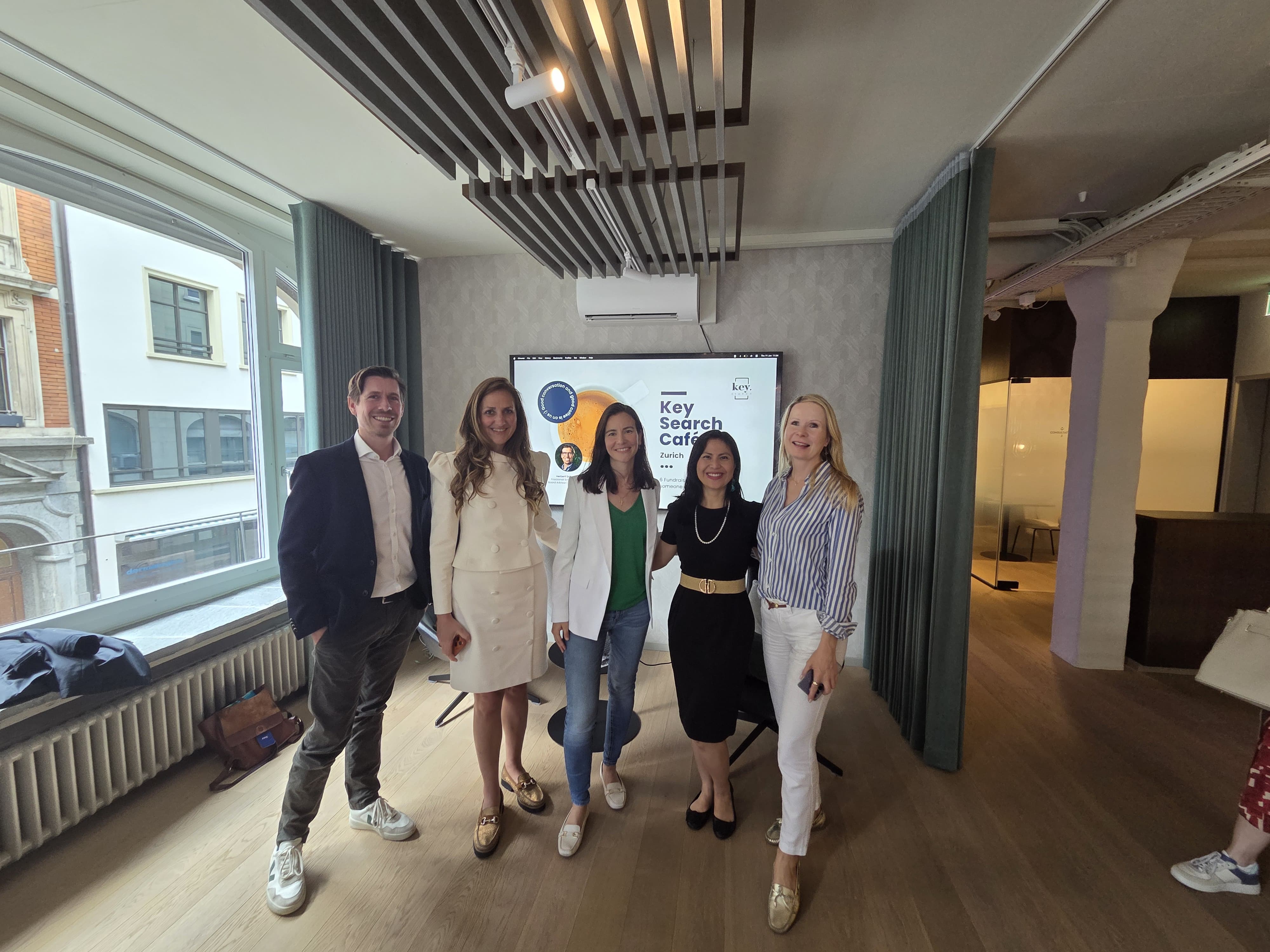
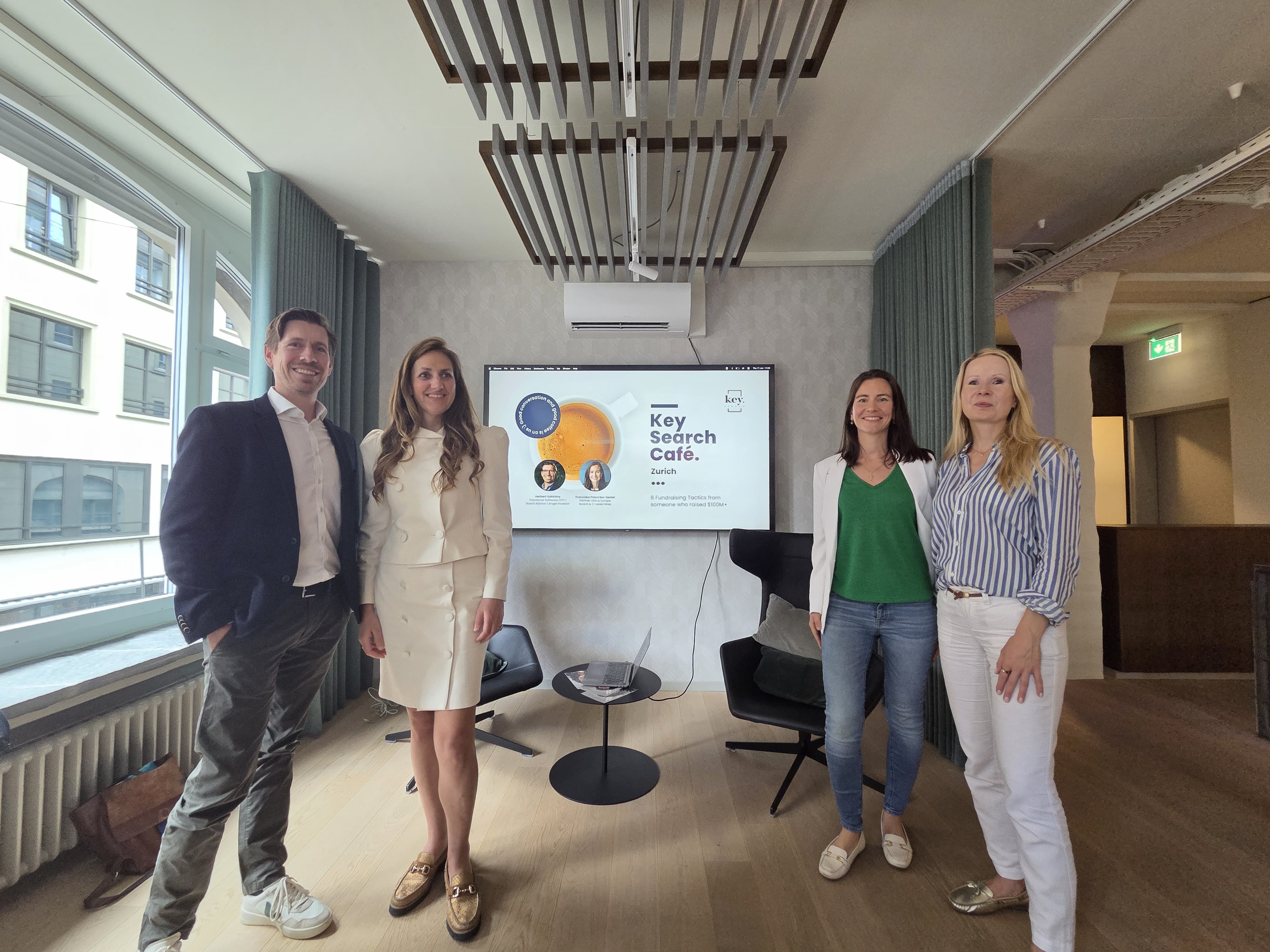
The Key Search Café Zurich, June 11th — Herbert Sablotny, Nilhan Göktaş, Franziska Palumbo-Seidel, Weronika Oesterreicher and team
Know your investor before you walk in
Founders spend enormous energy preparing their pitch and almost none researching the person on the other side of the table. That asymmetry costs them. Before any meeting, understand the investor's actual track record: how many successful exits have they been part of, how did their portfolio companies fare during downturns, and — critically — how did founders who worked with them feel about the experience? Investor references are just as valid as the references investors ask for. The best investors welcome the question. The ones who bristle at it are telling you something important.
For female founders in particular, knowing your investor also means understanding their portfolio composition. If a fund has backed very few female-led companies, that absence is data. It doesn't mean you shouldn't pursue them — it means you should go in with open eyes, and perhaps use that conversation as an opportunity to shift their perspective with a compelling story about your market.
Always be raising — fundraising is not an on/off switch
One of the most damaging patterns I see is founders treating fundraising as a discrete event: they run a process, close (or fail to close), then go heads-down for eighteen months and resurface when they need capital again. The problem is that by the time you're running out of runway, you're negotiating from weakness. The investors who move fastest and on the best terms are the ones who have been watching you execute for a year.
Always being 'on' doesn't mean sending investor updates to everyone you've ever met. It means maintaining genuine relationships — sharing milestones, connecting people in your network to theirs, being genuinely curious about their other investments. When you come back with a round to close, you're continuing a relationship, not starting a sales process. That shift in dynamic matters enormously, and it matters more in markets where investor sentiment is cautious.
Pivot from defence to offence in the room
This is the tactic that generated the most discussion in Zurich — because every founder in the room had lived it. There is a well-documented pattern where investors ask male founders how they will win, and ask female founders how they will avoid failure. The questions are structurally different. 'What's your moat?' versus 'What keeps you up at night?' 'How big can this get?' versus 'What are the risks here?'
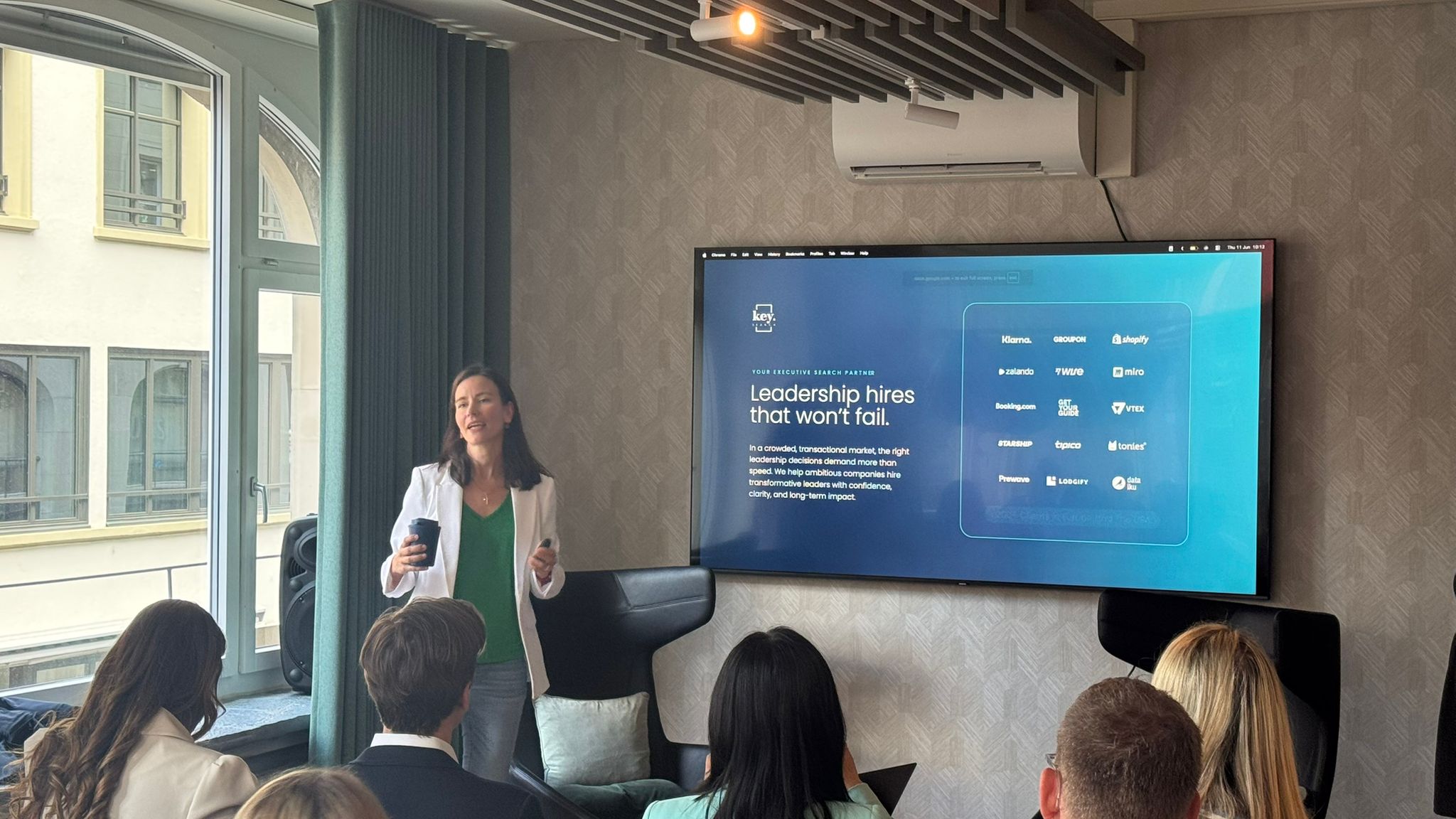
Franziska Palumbo-Seidel presenting to the room at Key Search Café Zurich
The risk question is not illegitimate — investors need to understand downside. The trap is spending the bulk of your time in the meeting answering it. The move is to acknowledge the risk clearly and briefly — one or two sentences that show you've thought about it seriously — and then immediately reframe the answer into a growth story. 'The key risk in this market is X, and here's exactly why our model addresses it — which is also why we see the opportunity as larger than most comparable businesses at this stage.' You've answered the question. You've demonstrated rigour. And you've pulled the conversation back to where you want it.
Practise this transition until it feels natural. The founders who do it well don't seem defensive or evasive — they seem like executives who understand their business completely.
Plan from the end
One of the most powerful reframes Herbert and I offered was about how to structure the use-of-funds narrative. Most founders present it bottom-up: here is what we'll spend, here is the headcount plan, here is the runway. The far more compelling version works backwards from a clear eighteen-month vision of success.
What does your business look like in eighteen months if this round goes to work exactly as planned? Not the cautious version — the version where everything you believe about your market turns out to be true. Paint that picture in concrete terms: revenue, user growth, key product milestones, strategic partnerships. Then work backwards to show exactly how each component of the raise drives those specific outcomes. This approach does two things simultaneously: it demonstrates that you are building with conviction, and it gives investors a specific vision of success against which to measure your execution as a portfolio company.
Investors back founders who know where they're going. The big, clear vision — grounded in a credible operational plan — is what separates the pitches that get a second meeting from the ones that don't.
Trust is your ultimate asset
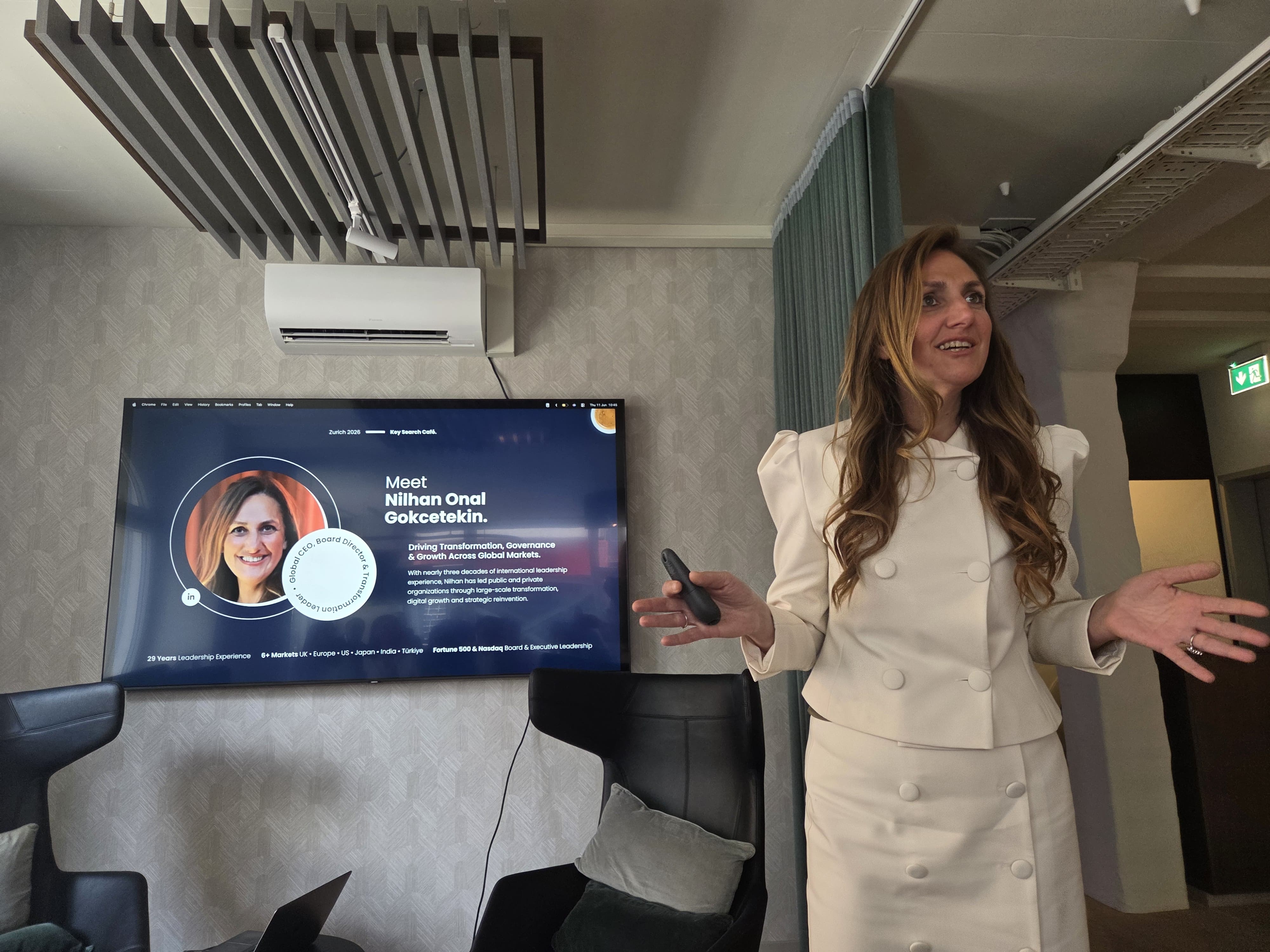
Nilhan Göktaş sharing her perspective on trust and transformation leadership
Nilhan brought a perspective from her experience leading large-scale transformation and navigating complex macroeconomic environments that I think is the most important single idea from the entire session. When you are operating in challenging conditions — high interest rates, geopolitical uncertainty, structural market shifts — the thing that protects you most is not your product roadmap or your cash position. It's the trust you have built with your team and your investors.
That trust is built through disciplined execution and constant, open communication. It is built by meeting your guidance consistently — and being honest when you won't. It is built by telling a visible, compelling growth story even when the macro backdrop is difficult. For ecosystems like AI, HealthTech, Education, and Fintech — sectors where the structural tailwinds are real and large — the opportunity is there for founders who can demonstrate this kind of credibility. The funding landscape is shifting, but for the right founders, building trust as systematically as they build product, it is shifting in their favour.
The conversation we need to keep having
What made the Zurich session valuable was not any single tactic — it was the quality of the conversation in the room. Thirty founders who were willing to be honest about what they'd experienced, ask hard questions, and share their own strategies with each other. That kind of peer exchange is rarer than it should be, and more useful than almost anything else available to early-stage founders navigating a market that was not designed with them in mind.
Herbert Sablotny, Nilhan Göktaş, Franziska Palumbo-Seidel and Weronika Oesterreicher — Key Search Café Zurich, June 2026
Thank you to Herbert, Nilhan, and everyone who joined us and made the conversation so rich. The gap is real. The opportunity is real. Let's keep pushing.
Key Search
Key Search specializes in expansion hires across Europe, the US, and transatlantic searches. To find out more about our US and North American hiring capability, visit us below.