

How to Interview Leaders: Interview Tips to hire the right Executives
When it comes to interviewing executive leaders, you aren't just filling a vacancy you are shaping the strategic trajectory of your organization. This guide provides your strategic blueprint for vetting, interviewing, and securing elite executive talent.
1. Defining the Leadership Scope: From C-Suite to Vice Presidents
- Investors & Boards: Leaders must convince stakeholders to back the company’s financial trajectory and long-term vision.
- Customers & Markets: Commercial and growth executives must convince the market of the company’s competitive edge and value proposition.
- Internal Teams: Product and technical leaders must convince their engineering and product teams to rally behind a roadmap and execute complex strategies under pressure.
- Peer Leaders: Cross-functional progress requires executives to convince other leaders to collaborate, align resources, and break down organizational silos.
2. Reviewing CVs for Strategic Depth
Modern Red Flags to Watch For:
- Stagnant Impact Metrics: Look out for CVs that list daily responsibilities rather than strategic outcomes, revenue growth, or team scale.
- Short Tenures in Major Transformation Roles: True leadership transformations take time to yield data. A pattern of short stints (under 18–24 months) might indicate a candidate who leaves before the long-term consequences of their decisions catch up with them.
- Unexplained, Prolonged Employment Gaps: Fixed macroeconomic shifts and personal leaves are entirely normal. However, consistent, unexplained gaps at the executive level warrant a deeper, transparent conversation during early vetting.
3. Structuring the Executive Interview Process
4. High-Impact Interview Questions
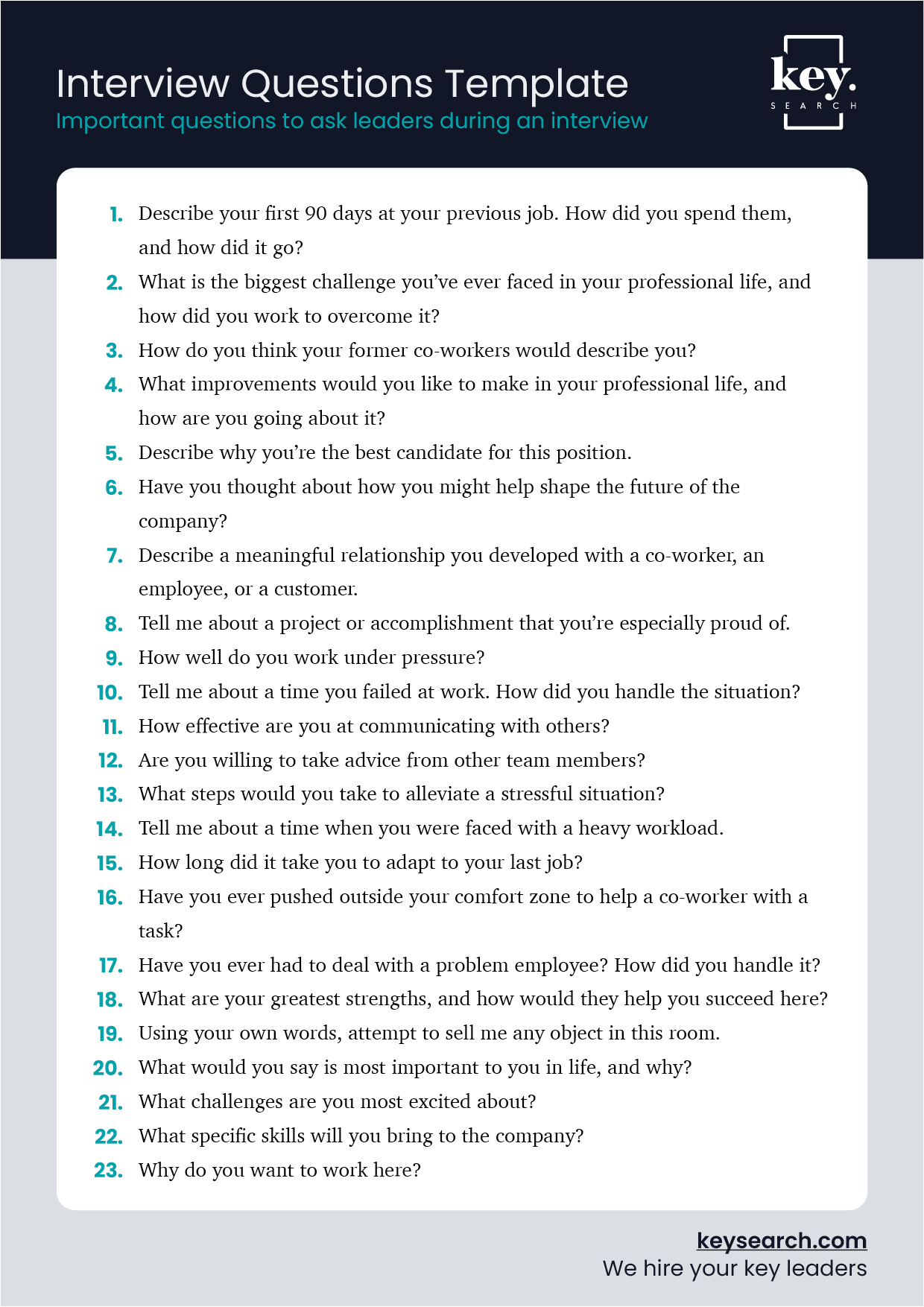
Strategic & Behavioral Questions
What to look for: You want an energetic leader who balances quick wins with active listening, rather than someone who passively “learns the ropes” or disruptively changes things without context.
What to look for: Focus on their problem-solving methodology, stakeholder communication, and how they brought their team along during a crisis.
What to look for: Look for balance. Are they vision-driven or detail-obsessed? Do they empower through delegation, or do they struggle to let go of the reins?
C-Suite Specific Questions
What to look for: True leaders are take-charge individuals who come prepared with a macro perspective on market trends and organizational design.
What to look for: Accountability is non-negotiable. The ideal candidate meets failure with humility and uses it as a strategic pivot point for systemic improvement.
What to look for: Beware the executive who claims perfection. Exceptional leaders actively invest in their own growth via mentorship, executive coaching, or continuous learning.
Competency & Skill-Seeking Questions
- “How do you approach managing a high-performing employee who has become toxic to company culture?”
- “Can you walk me through how you translate a complex, high-level corporate strategy into actionable goals for cross-functional teams?”
- “Why this company, and why right now? What specific market opportunity of ours excites you most?”
5. Evaluating Truthfulness and Avoiding Bias
6. Spotting Red Flags via Accountability
7. Securing the Close: Keeping Executive Talent Engaged
- Financial Incentives: A highly competitive base salary paired with clear performance-based bonuses, equity options, or phantom stock.
- Autonomy and Trust: Clear decision-making authority and a true seat at the strategic table.
- Modern Flexibility: True hybrid or remote flexibility, comprehensive health/wellness benefits, and executive-level PTO policies.
In Conclusion
Key Search
Key Search specializes in expansion hires across Europe, the US, and transatlantic searches. To find out more about our US and North American hiring capability, visit us below.
This article and its photos were created with the use of A.I. and reviewed by a human Key Search Partner.
Related articles

Emotional Intelligence: Why is Empathy Important in the Workplace?
A look at how to bring the benefits of emotional intelligence to the workplace We've all been there. That moment when we had to bottle up our emotions in order to conform to the "work persona." We put on a brave face and pretended like everything was okay, even when it wasn't. This isn't […]

The New Tech Hemisphere
A chance for developing countries to catch up? Do you ever wonder why, despite rapid advances in technology, there seems to be a wide gap between developed and developing countries? With modern digital tools becoming more accessible than ever before, it's only natural to question whether the new tech hemisphere is an opportunity for […]

Approach Toward Mental Health on Generation Z
Digital Health: New Approach Toward Self-care As the world emerges from the pandemic, it is becoming apparent that Generation Z were disproportionately affected by isolation and lack of connection to peers. Teens are dealing with anxiety and other mental health issues due to long periods of school absence, abrupt changes in friendship groups, and […]